


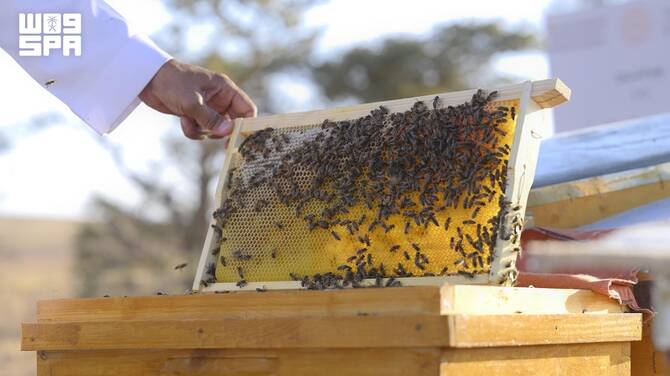
RAFHA: The Imam Turki bin Abdullah Royal Nature Reserve Development Authority has opened applications for Talh beekeeping permits as part of the fifth beekeepers’ season.
Applications can be submitted via the authority’s website, reflecting ongoing efforts to regulate beekeeping and promote the sustainable use of natural resources within the reserve.
The Talh season is one of the most important periods for beekeepers, as Talh trees (a native acacia species) provide a rich nectar source for bees, supporting the production of high-quality natural honey and highlighting the reserve’s biodiversity and vegetation.
According to the authority, the season will continue until Sept. 1.
It encouraged beekeepers to apply through the website and follow approved regulations and guidelines to ensure a well-organized and sustainable beekeeping experience.
Last month, the King Abdulaziz Royal Reserve Development Authority also launched the beekeeping season to promote the sustainable use of natural resources.
The season will run until Nov. 30, with 134 apiary sites allocated for beekeepers.
Authority spokesperson Abdulaziz Al-Furaih said the initiative supports beekeepers by providing access to the reserve’s rich natural resources.
He noted that the selected sites underwent environmental studies to ensure vegetation sustainability, biodiversity protection, and optimal productivity.